News tagged passive-cooling
-
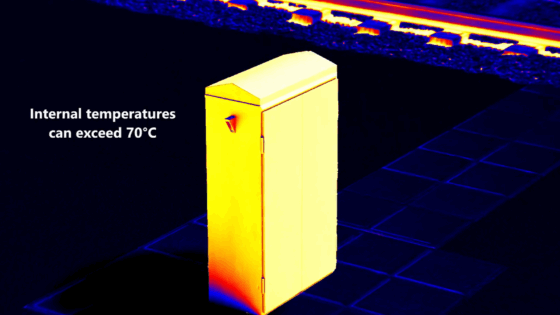
Network Rail trialling innovation that cools signal boxes to reduce heat-related failures
A new passive cooling technology is being trialled on the Tonbridge to Hastings line in Kent in an effort to reduce heat-related failures in railway signalling equipment and improve reliability for passengers and freight. The post Network Rail trialling innovation that cools signal boxes to reduce heat-related failures appeared first on New Civil Engineer.
-

FEMA to help communities pay for net-zero energy projects post-disaster
Communities can now leverage the agency’s grant programs to install solar microgrids, heat pumps and passive cooling when rebuilding schools, hospitals, fire stations and other infrastructure in disaster’s wake.
-

Oregon mass timber athletic center exceeds energy efficiency requirements
The new mass timber athletic center at the Oregon Episcopal School (OES) in Portland utilizes a highly efficient envelope, passive cooling, and minimal mechanical conditioning to achieve an 82 percent reduction in energy use from the Commercial Buildings Energy Consumption (CBEC) baseline, with an energy use intensity (EUI) of 15 kBtu/sf/year. The post Oregon mass timber athletic center exceeds energy efficiency requirements appeared first on Construction Specifier.
-

LAX’s concourse project to incorporate brise soleil for energy efficiency
Los Angeles International Airport’s (LAX’s) project, Midfield Satellite Concourse (MSC) South, will feature brise soleil—a solar shading feature on the concourse’s facade—which will help it achieve passive cooling and energy conservation. The post LAX’s concourse project to incorporate brise soleil for energy efficiency appeared first on Construction Specifier.
Resources tagged passive-cooling
-

Undecided - Cooling Our Homes Without Electricity? 10012023
This video looks at passive cooling systems as an alternative to air-conditioning
-

Just have a Think - Cool your home with zero electricity costs, 16102022
Solar cooling sounds like a contradiction in terms, but it could become a household phrase in a sustainable future, especially in off grid regions and developing nations because, if done properly, it could reduce your home temperature by almost 10o Celsius (19oF) with no electrical input at all. Now a team at MIT has developed the most efficient system yet
Get full access to our construction knowledge base, latest news and updates ... Join the discussion.